3 Key Takeaways:
- The extractor is one of the most failure-prone components in any semi-automatic firearm — and most factory extractors are just acceptable, not optimal
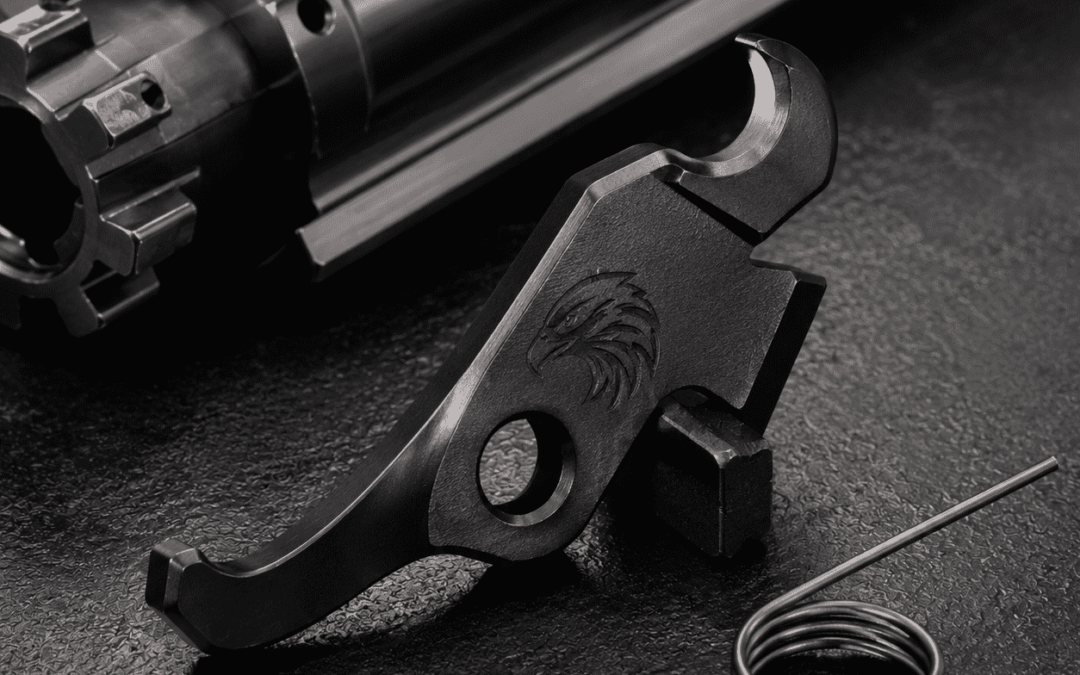
- Crom USA’s Eagle’s Talon Extractor is CNC-machined in Sacramento for superior grip, reliability, and service life
- This is the upgrade that experienced PC carbine shooters keep coming back to Crom USA for
Every PC carbine owner who puts serious rounds through their platform eventually has the same experience. The stovepipe. The case that didn’t clear. The malfunction at exactly the wrong moment that costs a stage, interrupts a training session, or — in the worst scenario — occurs when the platform is actually needed. And when they trace it back to the source, it almost always leads to the same component: the extractor.
The Eagle’s Talon Extractor from Crom USA was built specifically to eliminate that problem. Not to reduce it. Not to improve its statistics. To eliminate it — by replacing the limiting component with one that was designed and machined specifically to outperform what factory specification provides.
We machine it in Sacramento from billet aluminum, and we designed the geometry specifically for the extraction demands of the Ruger PC Carbine’s blowback operating system. It’s the upgrade that our customers come back to talk about the most — because the improvement is immediate, consistent, and exactly as significant as it sounds.
Why the Extractor Is the Most Critical Component in a Semi-Automatic Firearm
The extractor performs a simple mechanical function: it grips the rim of a spent cartridge case and pulls it out of the chamber as the bolt travels rearward during the cycling cycle. That function sounds straightforward until you consider the conditions under which it has to happen reliably — and the consequences when it doesn’t.
The forces involved are significant. During extraction, the extractor hook engages the cartridge case rim and bears the full extraction force as the bolt retracts against the pressure gradient in the chamber. The case may be slightly expanded from firing, creating friction between the case walls and the chamber that the extractor force has to overcome. In a blowback-operated system like the Ruger PC Carbine, the bolt begins its rearward travel while chamber pressure is still declining — which means the extractor is working during a phase where the case is still partially supported by chamber pressure.
The geometry matters precisely. The extractor hook has to engage deeply enough on the case rim to maintain positive retention through the full extraction cycle — but not so deeply that it creates resistance to the ejection phase when the case clears the chamber. The spring tension has to be high enough to maintain case contact through the extraction forces but not so high that it creates resistance to chambering. Every dimension of the extractor geometry has a direct effect on extraction reliability.
Failure modes are immediate and disruptive. When the extractor loses grip on the case rim during extraction, the result is a stovepipe — the spent case failing to fully eject, jamming the action with the case partially out of the chamber. Clearing a stovepipe requires manual intervention: removing the magazine, running the action to clear the case, reloading. In competition, that’s a stage-ending malfunction. In a defensive situation, it’s worse.
What Makes Most Factory Extractors Fall Short
Factory extractors are designed to function reliably across a broad range of operating conditions with a production cost that fits within the platform’s price point. They’re not designed to optimize extraction reliability at the limits of the platform’s operational envelope — they’re designed to work acceptably across the full range of typical use.
That design philosophy produces extractors that work well under light use but show their limitations when the platform is pushed. Here’s where factory extractors typically fall short:
Material hardness: Factory extractors are often made from materials that are adequate for light use but wear measurably faster than harder, more precisely specified materials under high-volume use. As the extractor hook wears, the engagement geometry changes — and extraction reliability degrades along with it.
Hook geometry: The geometry of the extractor hook — depth, angle, contact surface — determines how positively the extractor grips the case rim. Factory geometry is designed to work across the range of case dimensions the platform might encounter, which requires compromise between the maximum grip depth that maximizes retention and the clearance geometry that ensures smooth ejection. That compromise leaves room for improvement in extraction reliability.
Spring tension specification: Factory spring tension is calibrated for average conditions, not worst-case conditions. Under adverse circumstances — fouled chamber, tight-headspaced round, worn components — the factory spring tension may not provide enough extraction force to clear the case reliably.
How Crom USA Engineered the Eagle’s Talon Extractor
The “Talon” in Eagle’s Talon isn’t decorative — it reflects the specific design intent behind the extractor’s geometry. We designed the hook profile to provide a more positive, more aggressive grip on the case rim than factory geometry provides, without introducing resistance to the ejection phase of the cycling cycle.
The geometry optimization starts with the engagement depth — how deeply the extractor hook engages the case rim. We’ve taken this beyond factory specification to provide a more secure grip that maintains positive retention through the full extraction force cycle. The transition geometry between the engagement surface and the ejection release surface is designed to provide clean, reliable ejection once the case clears the chamber.
The billet aluminum material we machine the Eagle’s Talon from is harder and more dimensionally stable than the materials commonly used in factory extractor production. That hardness means the hook geometry maintains its specification across a much higher round count than factory extractors — which means the reliability improvement isn’t just present when the extractor is new, but sustained across the service life of the part.
Our CNC machining process holds every dimension of the extractor geometry to the tolerances our design requires. Every Eagle’s Talon that leaves our Sacramento facility is the same extractor that our testing validated — not an approximation of it.
If you’re ready to add the Eagle’s Talon Extractor in Sacramento to your PC carbine build, it’s available directly through our online store with complete compatibility and installation information.
Eagle’s Talon Extractor — Real-World Performance Benefits
Here’s what PC carbine owners consistently experience after installing the Eagle’s Talon Extractor:
Extraction malfunctions essentially disappear. The most consistent feedback we receive is that the extraction-related malfunctions shooters were experiencing — stovepipes, failures to eject — effectively stop after the Eagle’s Talon installation. This is the designed outcome, and it reflects the geometry improvement working as intended across real operating conditions.
Improved performance under fouled conditions. Competition shooters who run their platforms through full matches — 250 to 400+ rounds in a day — report that the Eagle’s Talon maintains reliable extraction even as the platform accumulates carbon late in the match. Factory extractors that function fine in a clean gun sometimes show reliability degradation as the platform gets dirty. The Eagle’s Talon’s more positive engagement geometry handles fouled conditions more reliably.
Consistent performance across ammo types. PC carbine shooters often run multiple ammo types through their platforms — match ammo for competition, practice ammo for training, defensive ammo for home defense configuration. Subtle differences in case dimensions and hardness between ammo types can affect extraction reliability with tighter factory extractors. The Eagle’s Talon’s geometry provides reliable extraction across a wider range of case specifications.
Sustained performance over high round counts. The harder billet aluminum material maintains its geometry across higher round counts than factory extractors, which means the reliability improvement is sustained rather than gradually degrading as the extractor wears.
Finding the Eagle’s Talon Extractor Near You
For Sacramento-area PC carbine owners, the Eagle’s Talon Extractor is available from the manufacturer who designed and machined it — right here in the city. Buying from Crom USA means buying from the people who can answer any question about the part, from installation detail to platform compatibility to what to expect from the performance improvement.
If you’ve been looking for the Eagle’s Talon Extractor near me or want to have a conversation about whether this upgrade is right for your specific build, reach out through our contact page. We’re here, we’re reachable, and we’re glad to help.
Installation Guide and Compatibility for the Eagle’s Talon Extractor
Platform compatibility: The Eagle’s Talon Extractor is designed for the Ruger PC Carbine platform. Verify your specific model and configuration against the compatibility information on the product page before ordering.
Installation difficulty: Extractor replacement on the Ruger PC Carbine requires accessing the bolt assembly. For shooters who are comfortable working on their platform’s action — familiar with field-stripping beyond the basic disassembly for cleaning — this is a manageable installation with the right tools. For shooters who haven’t worked inside their PC Carbine’s bolt assembly before, we recommend having a qualified gunsmith perform the installation. A correctly installed extractor is critical for reliable function — the installation is worth doing right.
Tools required: At minimum, you’ll need a flat-head screwdriver or punch for the extractor retaining pin (if applicable to your configuration), a small hammer, and a work surface that lets you contain small parts. Review the complete installation instructions included with the product before beginning.
Post-installation function check: After installation, verify function with a dry cycle before live fire. The extractor should engage a case rim cleanly and maintain retention through a simulated extraction motion. If anything feels wrong during the function check, stop and contact us before proceeding to live fire.
One Upgrade That Changes Everything. The Eagle’s Talon Extractor.
The extractor is the single component most responsible for whether your PC carbine runs reliably when it needs to. The Eagle’s Talon Extractor from Crom USA is the precision-machined replacement that closes the performance gap between what factory specification provides and what demanding use actually requires.
Order directly through our shop, or reach out through our contact page with any compatibility or installation questions before you buy.
FAQs
Q: What platforms is the Eagle’s Talon Extractor compatible with? A: The Eagle’s Talon Extractor is designed for the Ruger PC Carbine platform. Specific model and configuration compatibility details are listed on the product page. Contact us before ordering if you want to confirm fit for your specific configuration.
Q: How does the Eagle’s Talon Extractor differ from the factory extractor? A: The Eagle’s Talon features a redesigned hook geometry that provides a more positive, more aggressive grip on the case rim during extraction, combined with a harder billet aluminum material that maintains that geometry across a higher round count than the factory extractor. The result is more reliable extraction across all operating conditions and a longer sustained service life before the geometry degrades enough to affect function.
Q: Can I install the Eagle’s Talon Extractor myself or do I need a gunsmith? A: Shooters comfortable working inside their Ruger PC Carbine’s bolt assembly can install the Eagle’s Talon themselves with the right tools and careful attention to the installation instructions. If you haven’t worked inside your PC Carbine’s bolt before, having a qualified gunsmith perform the installation is the right call — a correctly installed extractor is the difference between a reliable upgrade and a new function problem.